
### Blog Post:
Compact Espresso Machine buyers crave café-level espresso in a small footprint, but actually choosing the right one for your apartment isn’t just about size—it’s balancing shot quality, quiet use, easy maintenance, and picking the best accessories to match your lifestyle.
Key Takeaways
- Compact espresso machines for apartments should fit under cabinets (roughly 7–9 in. wide, 12–14 in. high, 7–9 in. deep, 10–15 lbs), but you must check heat-up time, noise, and cleaning demands before you buy.
- Don’t just chase the smallest model. Look for solid shot consistency (PID control), a real steam wand, serviceable pump, and a water reservoir size that matches your espresso volume.
- The right grinder and a few simple maintenance habits can make even a modest compact espresso machine produce café-quality shots for years—don’t skip these.
- Why choose a compact espresso machine for your home?
- Step-by-step guide: How to pick a compact espresso machine for apartments
- Advanced analysis & common pitfalls
- Conclusion & next steps
- Quick FAQ for compact espresso machines
Why choose a compact espresso machine for your home?
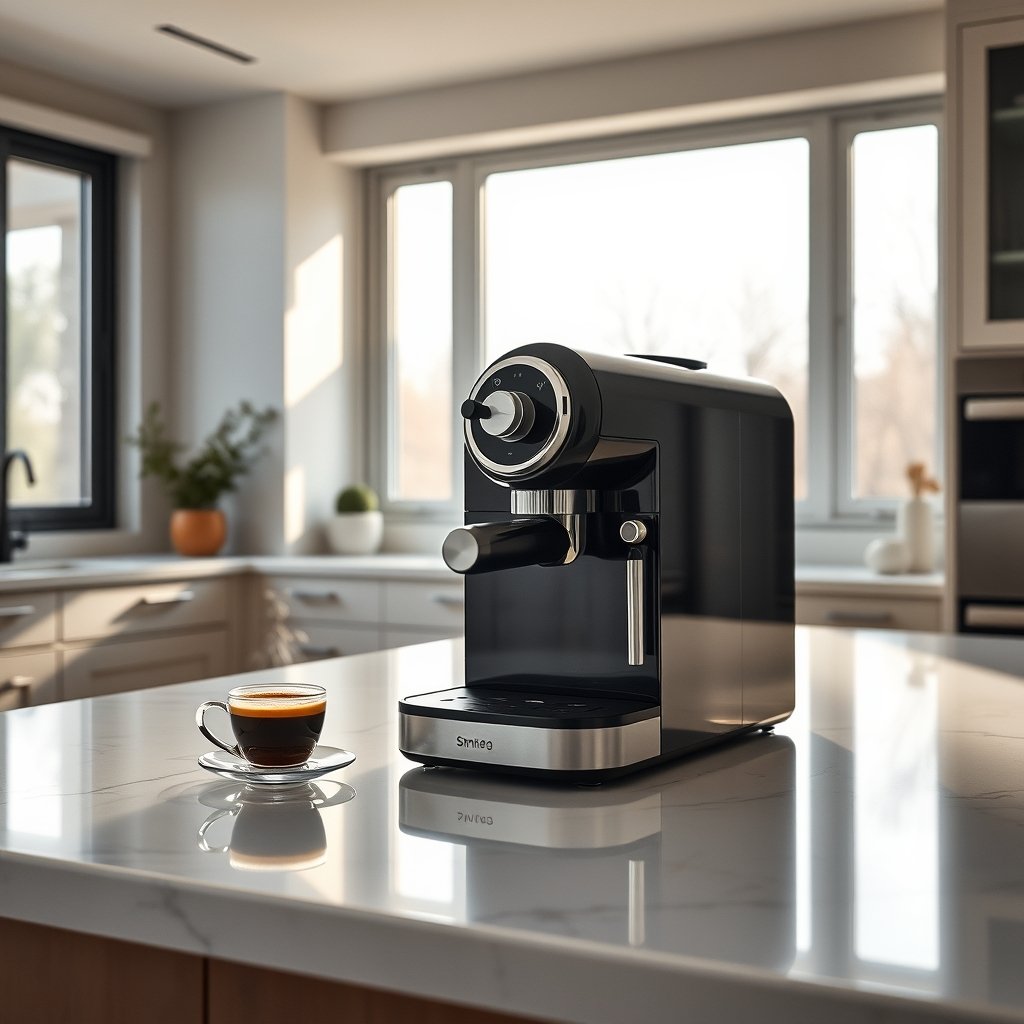
Choosing a compact espresso machine isn’t just about saving counter space. “Compact” in this context means a small espresso machine countertop unit that fits under standard cabinets—usually 7–9 inches wide, 12–14 inches tall, and no more than 9 inches deep. These models typically weigh between 10 and 15 lbs and are ideal for apartment dwellers or anyone with a small kitchen.
But what do you give up or gain by scaling down? Size limits boiler capacity, water reservoir (usually 0.5 to 1L), and sometimes steaming power. Why does this matter? Smaller boilers can mean less stable shot temperatures and weaker milk frothing, so you need to prioritize either top-level espresso shots or versatile milk drinks. A compact machine won’t always match the stamina of a large prosumer setup, but it can still deliver results that rival your local café—if you buy wisely.
Step-by-step guide: How to pick a compact espresso machine for apartments
Follow these steps to make sure you get the best compact espresso machine for home—not just the smallest.
- Measure your available space. Check your counter depth, cabinet height, and outlet location. Verify that the full footprint (including room to remove and refill the water reservoir from behind or above) fits.
- Read through actual pain points, not just marketing. Focus on common issues: excessive noise, heat-up time (8–15 min is common), small water tanks, and inconvenient cleaning. There’s a real difference in quality between a truly “mini espresso maker apartment” unit built to last and the cheapest import.
- Decide your priority: Is your main goal pure espresso shot quality, or do you need reliable milk steaming for lattes? If you love straight shots, prioritize temperature control (PID or stable single boiler). For milk drinks, a machine with a consistently strong steam wand—even in a compact body—is essential.
-
Research technical specs beyond the sales pitch.
- Most compact espresso machines deliver industry-standard 15 bar pump pressure (Consumer Reports), but the way the boiler or thermocoil heats water makes a big difference in consistency and speed.
- PID controllers, even on compact machines in the $500–$1,200 range, reduce shot variation and are found on models like the Breville Bambino Plus (Yahoo! Shopping).
- Look for at least a 0.6L water reservoir if you drink multiple espressos or often entertain.
- Consider noise and heat-up time. Check for dB measurements and user complaints about vibration or rattling. If no objective data is provided, be ready to return or exchange if it’s too loud for shared apartment walls.
- Check real-world maintenance and part availability. Machines without a three-way solenoid valve are messier to clean and slower to purge. Make sure seals and group-head components are serviceable and that support in your country is solid.
-
Set a realistic budget for the machine, grinder, and a few must-have accessories.
- Entry-level: $300–$500 gets basic features, minimal automation, likely manual milk frothing.
- Mid-tier: $500–$800 brings semi-automatic controls, better shot stability, improved cleaning (see the Compact Espresso Machine proven guide for examples).
- Prosumer-compact: $900–$1,200 nets you models like Lelit Mara X or Breville Bambino Plus with better PID, real steam quality, and premium durability.
- Choose the right grinder and essential accessories. Your shot quality depends more on grind consistency than machine cost. Consider a compact burr grinder (single dose grinder), a properly sized tamper, and a simple water filter for maintenance.
Advanced analysis & common pitfalls
Even the best compact espresso machine can still frustrate you if you’re not aware of these realistically common pitfalls:
- Noise during pump cycle—many “mini espresso maker apartment” models use less-dampened vibration pumps and can easily exceed 70 dB (almost hair dryer loud). Always check reviews for real-world feedback, and beware of manufacturer claims that don’t cite decibel data.
- Slow heat-up times—inexpensive models can need 8–15 minutes to reach shot or steam temperature, which can derail a fast morning routine. Mid-range and some automatic models halve this time, but verify with user videos or trusted review sites like Wirecutter.
- Maintenance headaches—cheap compact machines often lack a three-way solenoid valve, making puck removal muddy and shot cleanup messy. Seals and group-head gaskets may require replacement yearly if used heavily.
- Underwhelming steam power—single boiler or thermoblock machines can struggle with back-to-back milk drinks, especially at the entry level.
- Small water tanks—0.5L means frequent refilling, especially if using the steam wand often.
- Grinder mismatch—using a basic blade or inconsistent grinder will give you sour or bitter shots, no matter how good the compact machine. Always pair with reliable burr grinders (electric grinder guide).
- Parts and warranty gaps—many top-ranking reviews skip long-term reliability, actual mean-time-between-failure rates, and whether you have easy access to service if something breaks (Cliff and Pebble Guide).
| Model | Dimensions (W x H x D) | Weight | Water Reservoir | Boiler Type | PID Control | Price Range |
|---|---|---|---|---|---|---|
| Breville Bambino Plus | 7.6″ x 12.2″ x 12.5″ | 11 lbs | 1.9L | Thermocoil | Yes | $500–$700 |
| Lelit Mara X | 8.7″ x 14.7″ x 16.5″ | 21 lbs | 2.5L | Heat exchange | Yes | $1,100–$1,200 |
| De’Longhi Dedica | 6″ x 12″ x 13″ | 9 lbs | 1L | Single boiler | No | $300–$350 |
-
Buy based on real scenarios:
- Tiny Counter/Under-cabinet: Slim models fitting the 7–9 in. wide, 12–14 in. high envelope and weighing 10–15 lb, like De’Longhi Dedica. Expect entry-level features, basic steam, and price around $300–$500.
- Balanced Compact for Lattes: Models like Breville Bambino Plus or Gaggia Classic Pro, small countertop footprint, real steam wands, fast heat-up with PID. Expect $500–$800.
- Compact Prosumer/Home Barista: Lelit Mara X fits apartments but offers industry-grade E61 group, PID, and heat-exchange boiler. Price $900–$1,200.
For a more complete checklist or scenario-based buying guide, see our in-depth comparison.
Conclusion & next steps
Most “compact” espresso machines can fit even the smallest apartment spaces, but choosing the right model is about more than footprint. Look for a water reservoir over 0.6L, PID/heating speed for shot quality, and prioritize a real steam wand if you love milk drinks. Noise and maintenance matter just as much as technical specs. Don’t overlook matching your machine to a proper grinder and a few key accessories.
If you’re starting your apartment barista journey, use the buying checklist, weigh which cafe experience you want at home, and take time to read reviews that actually test heat-up times, noise, and build quality. For reference: most small machines deliver industry-standard 15 bar pump pressure, and prices realistically fall between $400 and $900—prosumer models push $1,200.
Ready for hands-on recommendations? Check out our full compact espresso machine shortlist and don’t skip reading how your grinder and accessories can make or break each shot.
Your apartment, your rules—just don’t neglect what separates a compact espresso machine from a forever upgrade and a short-lived gadget.
Quick FAQ for compact espresso machines
Why does my compact espresso machine make so much noise?
Most compact units use vibration pumps, which can be loud—sometimes 70 dB or above. You can reduce noise by placing a silicone or anti-vibration mat under the unit. If noise is a major concern, seek out models with measured decibel ratings or rotary pumps (rare at this size and price).
Why do my shots taste sour or bitter?
Common reasons: grinder too coarse or too fine, shot temperature not stable, or inconsistent dose. Compact machines need a good burr grinder and PID to stabilize temperature for best shot results.
How often should I descale a small espresso machine?
For apartment water hardness, descale every 1–3 months, or as soon as you see scale buildup. Use purified or filtered water whenever possible to extend machine life and minimize maintenance.
Can I get café‑quality lattes from a compact machine?
Yes, but only if your machine has decent steam power and a real steam wand—not just a “frother.” Prosumer compacts like the Lelit Mara X or Breville Bambino Plus offer much better results than entry-level models.
Is it worth paying extra for an automatic compact espresso machine?
If you want true one-touch espresso and milk drinks, a compact automatic can be a game changer, but you’ll pay at least $500 for café-level performance. At the smallest sizes, some automation features are more hype than help—always check real-user reviews before buying.
—