

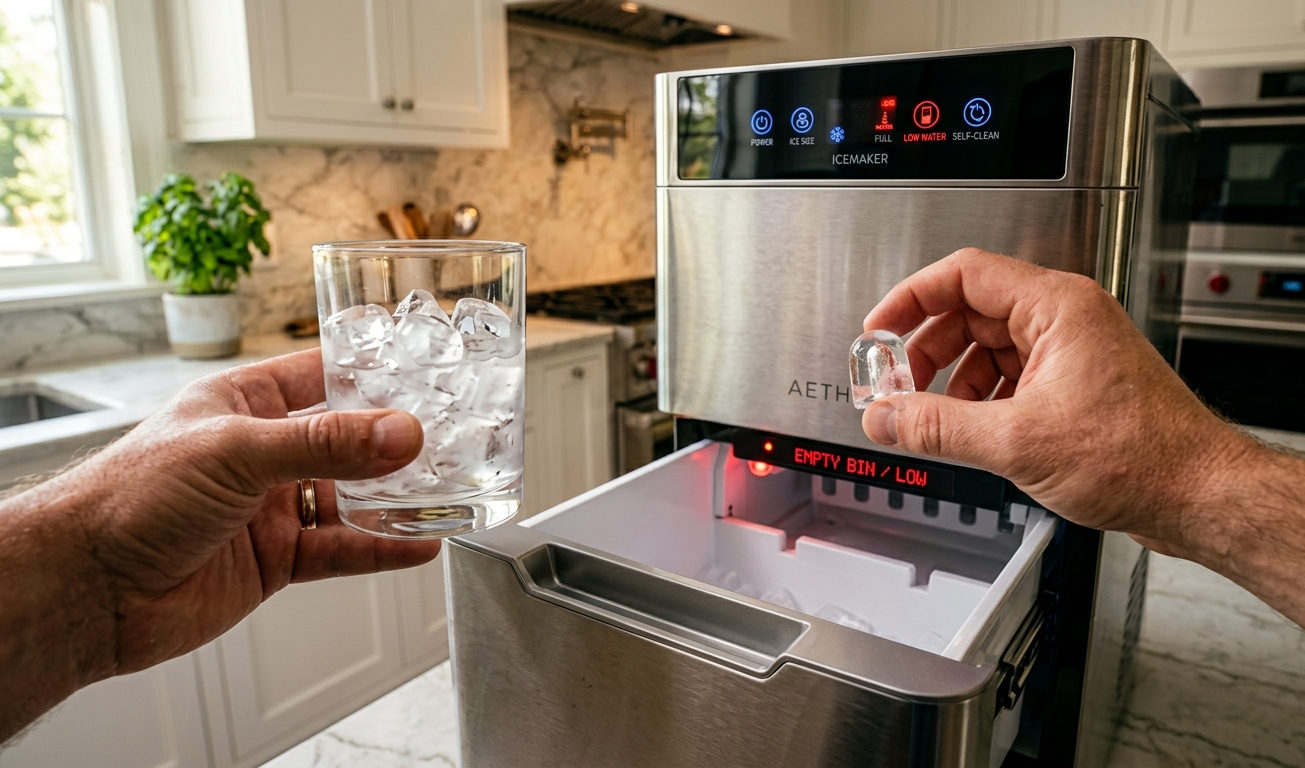
countertop ice maker units have become the go-to solution for homeowners and renters whose built-in fridge ice makers fail or who simply want more reliable ice without the cost and hassle of a new fridge or permanent installation.
Key Takeaways
- Most countertop ice maker reviews skip over real-world issues—noise, reliability, and cleaning matter just as much as specs.
- Nugget ice (soft, chewable) is leading the market, but true daily output and noise levels vary far more than product pages suggest.
- Simple maintenance routines and buying checklists are essential for long-term satisfaction and avoiding leaks or breakdowns.
- Quick verdict — Is a countertop ice maker right for your replacement/upgrade need?
- Why countertop nugget ice is booming (market and consumer trends)
- Nugget vs. cube vs. craft ice — which texture fits your use case?
- True production capacity — how much ice do you really need?
- Noise — what manufacturers don’t always tell you (real dB vs. perceived noise)
- Reliability — common failure modes and how to avoid them
- Ice quality & water taste — filtration, maintenance, and diagnosis
- Maintenance checklist — cleaning cycles, filters, and serviceability
- Installation & placement — portable countertop vs. under-counter tradeoffs
- The 6-point buyer checklist (what competitor articles usually miss)
- Shortlist method — how we pick recommended models (criteria + sample callouts)
- Troubleshooting common complaints — quick fixes for noise, leaks, and poor ice
- FAQs — short answers to the most searched questions buyers actually ask
- Bottom line & next steps (shopping + installation checklist)
Quick verdict — Is a countertop ice maker right for your replacement/upgrade need?
If you’re considering a replacement for your failed refrigerator ice maker, a countertop ice maker may be the smartest choice if you: want fast installation with no plumbing hassle, prefer portability (for RVs, rentals, or home bars), or simply want to avoid the cost of a new fridge. In 2024, about 15–18% of U.S. households own a countertop unit, a number climbing each year due to their convenience and flexibility (source).
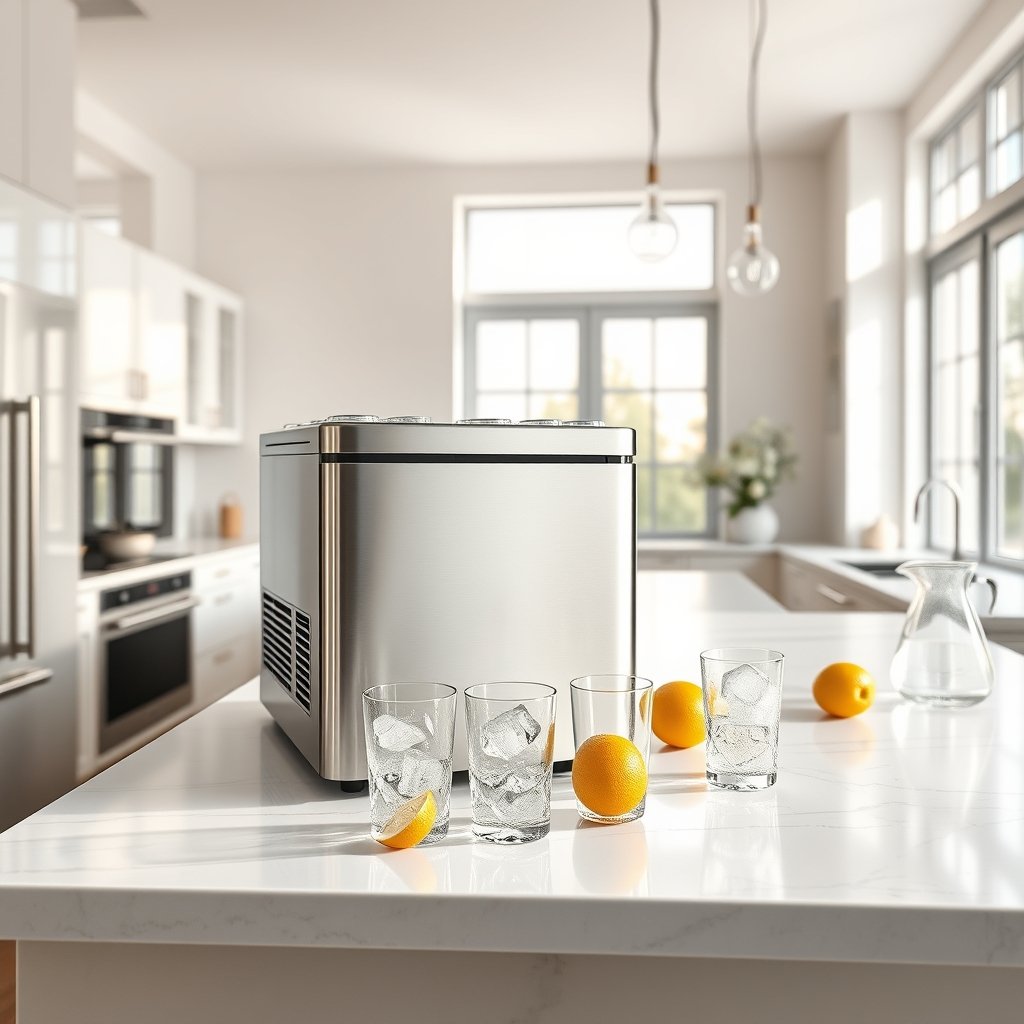
Repairing a built-in fridge ice maker can cost $250–$450, requires waiting for a technician, and often fails again within a few years. By contrast, countertop models deliver ice in under 10 minutes, require only a nearby outlet, and can be tucked away between parties. Under-counter ice machines look sleek and offer higher output, but add complexity and cost due to permanent installation and plumbing.
If your main priorities are fast ice, cost savings, and easy relocation, a countertop ice maker is typically the best solution. If you want a seamless, built-in look with quieter operation and have a larger budget, consider an under counter ice machine kitchen instead.
Why countertop nugget ice is booming (market and consumer trends)
Countertop nugget ice makers are everywhere—and for good reason. As home entertaining, mixology, and compact living rise, so does demand for specialty nugget ice (sometimes called “pellet” or “Sonic ice”), which is preferred for cocktails, sodas, and even healthcare use thanks to its chewable, fast-cooling texture.
In 2024, the global countertop ice‑maker market hit $1.6 billion, capturing roughly 62% of the home ice‑maker segment (source). U.S. sales alone were approximately $1.4 billion, fueled by beverage culture, RV use, and rentals. The countertop ice maker nugget ice machine format is winning because it gives users flexible placement, no need for special plumbing, and ice types (like the best nugget ice maker home options) unavailable in most fridge dispensers.
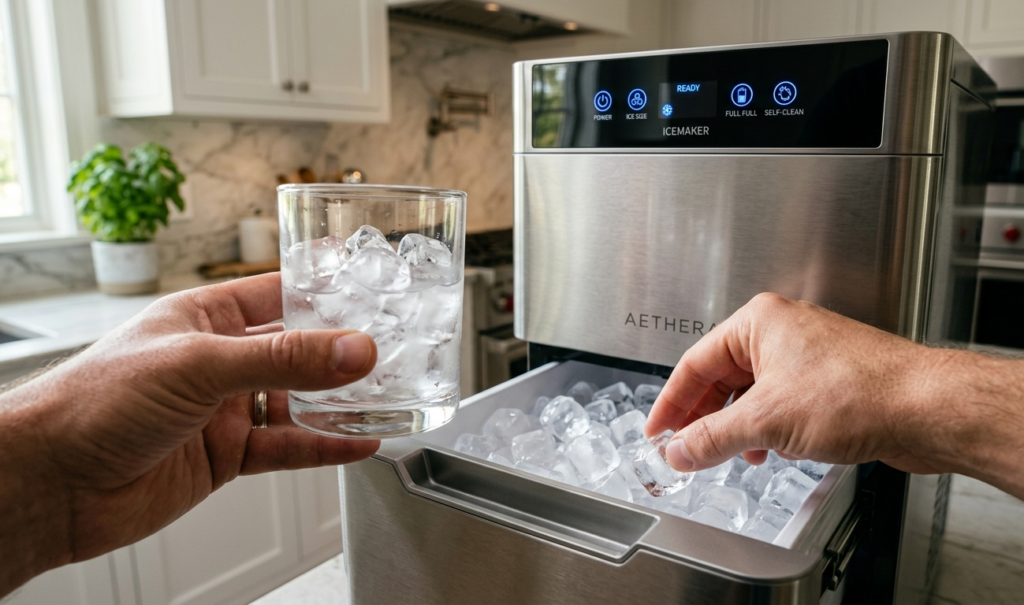
For more tips on maximizing kitchen space, check out our Compact Espresso Machine and Portable Air Fryer guides.
Nugget ice machines also address specific needs for medical and rental environments. Portable countertop ice maker reviews often praise nugget ice for its accessibility as well as flavor enhancement, with major shifts in consumer preference—especially among users who want soft, chewable ice types impossible with traditional cube makers (source).
Nugget vs. cube vs. craft ice — which texture fits your use case?
Should you get a countertop ice maker nugget ice machine, a cube machine, or a fancy craft ice sphere maker? It depends on how you use ice daily:
| Ice Type | Best For | Pros | Cons |
|---|---|---|---|
| Nugget | Cocktails, soda, smoothies, healthcare, chewing | Chewable, fast-chilling, popular in bars | Higher price, slower batch time, requires more maintenance |
| Cube | General use, large batches, water bottles | Fast, clear, often higher output | Hard, melts slower, less chewable |
| Craft (sphere) | Whiskey, premium cocktails, showy drinks | Slow melting, impressive look | High cost, rare in portable units, slow cycle |
Consumer data shows nugget ice models now reach 34–45 lbs/day (e.g., GE Profile Opal or Euhomy), while many compact cube makers produce about 26 lbs/day (source). If your old built-in only made hard cubes and you host friends, nugget types are an upgrade. If you only need ice for water bottles, a compact cube machine is plenty.
See our Countertop Ice Maker replacement guide for more use case examples.
True production capacity — how much ice do you really need?
Manufacturers like to boast about daily output—26, 33, or even 45 pounds per day. But what does that mean at home? Most units only hold about 2 lbs at once and dump a batch (8–12 cubes, or handfuls of nugget ice) every 8–15 minutes. For a single user, 10 lbs/day covers daily drinks. For parties with 10+ guests, you may need 20 lbs or more, especially in summer.
Quick calculator: If you estimate 0.5 lb of ice per drinker per hour, then a 26-lb/day unit covers about 50 drinks (over 4–5 hours) before running out. Larger nugget units producing 38–45 lbs/day can support most at-home events. (For comparison, see reviews from Consumer Reports and Amazon bestsellers.)
Don’t buy by raw numbers alone. Some users report slower cycles or less storage than claimed—always check user feedback on “actual daily output.”
Noise — what manufacturers don’t always tell you (real dB vs. perceived noise)
Most quiet countertop ice maker models are rated 40–45 dB, similar to a fridge’s hum. But many reviewers point out that water pumps, compressors, and ice-drop cycles create a louder, cyclical hum that can be disruptive in open kitchens or late at night. For those sensitive to noise, compact under-counter machines are often quieter but require more work to install.
Placement helps a lot—set your portable ice maker on a thick towel, away from walls, and not directly on hollow counters to reduce vibration noise (source). If quiet operation is a top concern, look for third-party portable countertop ice maker reviews—not just specs—to get a sense of true sound levels over time.
Reliability — common failure modes and how to avoid them
Frequent issues in user reviews include compressor or water pump failures (sometimes within a year), leaks from poor seals, and broken sensors. Cheaper plastic models see higher failure rates. Before buying, check:
- Warranty (1-year minimum; 2+ years is better for compressors)
- Reputation via real portable countertop ice maker reviews (Consumer Reports, Amazon, or trusted bloggers)
- Availability of replacement parts (e.g., filters, baskets, pumps)
- Build (heavy, metal-framed units last longer than thin plastic)
Reliability is the number one reason for returns. Short warranties and hard-to-clean designs are red flags. See our multi cooker buyer’s checklist for a similar breakdown on appliance durability.
Ice quality & water taste — filtration, maintenance, and diagnosis
The taste and texture of your ice depend on water source, whether there’s built-in filtration, and how often you clean. Common complaints include rubbery-tasting ice, uneven nugget texture, and production slowdowns. Always use filtered tap or bottled water with a countertop ice maker nugget ice machine. If your model has a water filter, replace it every 3–6 months or as the manual directs.
Signs of problems: cloudy or off-smelling ice, reduced output, or strange texture (nuggets coming out half-melted). These usually mean it’s time to clean or descale. Skipping maintenance is the main risk for unreliable ice quality (source).
Maintenance checklist — cleaning cycles, filters, and serviceability
Maintaining your Countertop Ice Maker is essential for long life and safe, tasty ice. Here’s a sample routine:
- Deep clean 1x per month (more if in daily or heavy use; use a mix of vinegar/water, run through self-clean cycle if present)
- Wipe down exterior and bin every week
- Replace built-in filter every 3–6 months
- Descale with food-safe solutions as directed in the manual
Many popular units (like the GE Profile Opal and Euhomy) now include self-cleaning cycles, with antimicrobial liners to prevent buildup (source). These features are worth paying extra for if cleaning isn’t your favorite job. For more on choosing easy-to-maintain appliances, check out our multi cooker checklist.
Installation & placement — portable countertop vs. under-counter tradeoffs
The main tradeoff comes down to portability versus performance. Countertop models have a built-in reservoir (filled by hand), need just an outlet, and can move between rooms or homes—ideal for renters and those hosting events or traveling in RVs. Under-counter (built-in) models use a direct water line, require plumbing, and need space for ventilation—but are quieter and less likely to leak.
For most users, standalone countertop ice makers (like those featured in our replacement guide) cover daily ice needs and avoid permanent changes to your kitchen. Placement tips: allow 6″ venting space, keep on a level surface, and keep away from heat or direct sun to optimize performance.
The 6-point buyer checklist (what competitor articles usually miss)
When picking the best nugget ice maker home unit or a quiet countertop ice maker, use this practical checklist to judge any model:
- Real daily output: What do user reviews say about “actual” 24-hour ice made, not just specs?
- Measured noise: Look for recorded dB or video reviews in real kitchens, not lab numbers.
- Warranty and service: Compressor and pump should have at least 1–2 years; check for replacement parts availability.
- Cleaning: Is there a self-clean cycle? How easy is it to access the water tank and bin?
- Drainage or leak risk: Any mention of leaks or wet floors in buyer complaints?
- Reliability: Is there evidence of common failures—do real buyers warn about pumps/compressors dying early?
Competitor articles rarely answer these details. Always scan for verified reviews or real-world video testimonials before buying.
Shortlist method — how we pick recommended models (criteria + sample callouts)
Here’s how to vet units for your shortlist—use these criteria for each portable countertop ice maker review you consider:
- True daily output: Look for models that deliver at least 80% of their claimed lbs/day in independent tests.
- Measured noise: Seek units averaging under 45 dB in the kitchen during all cycles; avoid models with repeated loud hum complaints.
- Warranty length: Prefer at least 1–2 years on main components.
- Filter/self-clean: Higher-value models offer antimicrobial bins and true self-cleaning cycles.
- Installation flexibility: Does it need plumbing, or simply fill from the top?
- Real-world reviews: Focus on durable, widely owned models with evidence of long-term use; see Amazon’s best sellers.
Sample review blurb format:
Model: Euhomy IM-60D
Output: 26.5 lbs/day (users report ~24 lbs real average)
Noise: Rated 42 dB; user videos confirm quiet operation
Reliability: Mostly positive, with few pump failures in first two years
Cleaning: Self-cleaning available; bin accessible
Best For: Small families, renters, and event hosts
Source: Multiple verified reviews at Amazon best sellers
Typical compact units: ~26 lbs/day; top nugget models: 34–40+ lbs/day.
Troubleshooting common complaints — quick fixes for noise, leaks, and poor ice
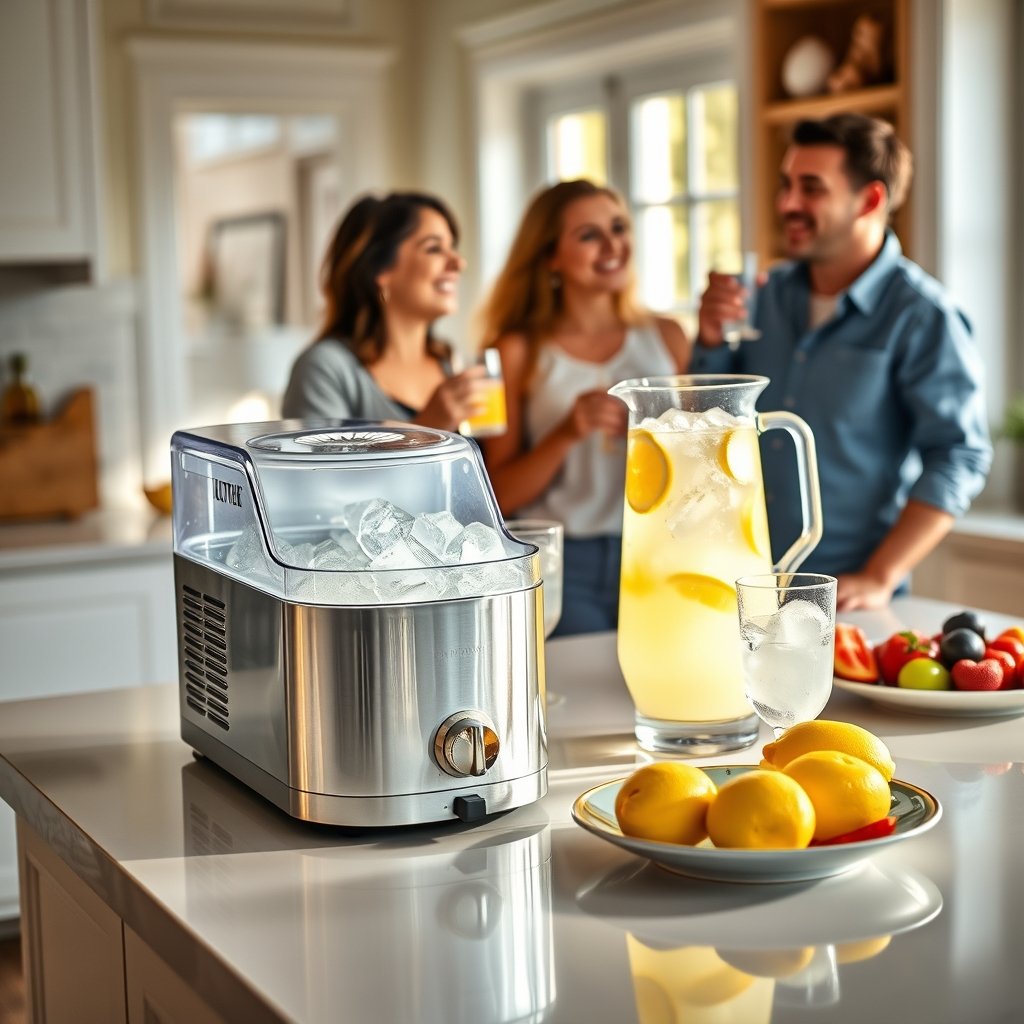
Most countertop ice maker problems fall into three camps: noise, reliability (compressor/pump/leaks), and ice quality. Here’s how to fix them fast:
- Unit noisy? Make sure it’s placed on a solid, flat surface. Move away from hollow counters. Level legs or add a silicone mat if vibration is strong.
- Leaking water? Check for blocked or misaligned drain plugs. Clean any scale in waterlines and ensure the bin is inserted correctly.
- Poor ice or slow production? Clean and descale the machine fully. Replace water filter. Swap to bottled or filtered water if using hard tap water. Decrease room temperature if in a hot kitchen.
- Unit not turning on? Wait 30 minutes, then restart. Check breaker or fuse. For persistent electrical failures, contact warranty support promptly.
- For further support, our complete troubleshooting guide covers specialty fixes and advice.
FAQs — short answers to the most searched questions buyers actually ask
Will a countertop ice maker really replace my fridge’s ice dispenser?
For most households, yes—especially if you pick a model with at least 26–34 lbs/day output. You’ll need to manually refill the reservoir and transfer ice to the freezer if you need it for later. But they produce ice faster than most in‑fridge units and avoid plumbing hassles.
How loud is a typical countertop ice maker during operation?
Most units are rated 40–45 dB (like a quiet fridge). However, users often report that water pumps and compressors get noticeably louder during cycles. Check video reviews for in‑home sound, especially if you want the quietest countertop ice maker.
How often should I clean my ice maker?
Clean the ice bin and reservoir every week. Run a full deep clean with descaling solution monthly. If you use the machine in a rental/RV or daily, clean twice as often. Self-cleaning cycles are a major plus.
How much ice do I need for a party of 10?
Estimate at least 0.5–1 lb of ice per guest per hour. For a 4‑hour party, 20–30 lbs covers drinks and extra. Consider a unit rated at least 33 lbs/day, or bag ice ahead of time for backup supply.
What should I look for to get the best nugget ice maker home model?
Check reviews for true daily output, noise in real kitchens, build quality, self‑cleaning features, warranty length, and ease of finding replacement filters. Don’t just trust specs—read several portable countertop ice maker reviews on reliability.
Bottom line & next steps (shopping + installation checklist)
If you need ice fast, want to avoid plumbing hassles, or want nugget ice for your home bar, the Countertop Ice Maker beats repairing built-in dispensers or paying premium for a new fridge. Under-counter machines suit those willing to pay for quieter, permanent integration. For most users—especially renters, RV owners, and party hosts—countertop models offer standout value, flexibility, and the ability to upgrade ice quality on your terms.
- ✔️ List real-world output, noise, and warranty before buying
- ✔️ Choose filtered water and clean monthly for the best taste
- ✔️ Select models with self-clean cycles for less maintenance
- ✔️ Print a pre-purchase and maintenance calendar
For comprehensive picks and more real testing, see our updated Countertop Ice Maker replacement guide and our Multi Cooker checklist for other smart kitchen upgrades. Ready to upgrade? Compare a few models with our checklist and enjoy clear, chewable ice all summer long.