

### Blog Post:
Induction Burner use is quickly becoming the apartment cook’s best low-hassle upgrade, combining lower energy bills, clean air, and real kitchen flexibility—often without needing to touch your landlord’s stove or break your lease. Here’s how a single induction burner can outsmart gas for most renters, how you can measure the savings, and common mistakes to avoid before you buy or upgrade.
Key Takeaways
- Induction burners are about 90% efficient, making them up to 3 times more energy efficient than gas stoves in small apartments.
- Most renters see lower utility bills, a cooler kitchen, and cleaner indoor air, plus potential rebates that shrink payback time.
- Common pitfalls—like sensor errors or surface cracks—are easily avoided with the right choice and a quick in-home test.
- Quick verdict — Is induction worth it for apartment cooks?
- Energy & performance comparison — Induction Burner vs Gas Stove
- Apartment-specific benefits — less kitchen heat, better indoor air, and safety
- Upfront costs, ongoing savings, rebates & simple ROI
- What to look for in a portable / single induction burner (must-have specs)
- Most frequent complaints & troubleshooting (what buyers actually report)
- Electrical & installation considerations for renters
- Long-term durability, maintenance & lifecycle expectations
- Top recommended models to try (trial-first approach)
- When to choose a portable burner vs upgrade the built-in cooktop
- Quick buyer’s checklist + in-home test script
- Final recommendation & next steps
- FAQ
Quick verdict — Is induction worth it for apartment cooks?
For most renters, a portable induction burner is an easy win. It offers the major benefits of built-in induction—speed, energy savings, precise temperature control, and cleaner indoor air—without plumbing headaches or landlord permission. At roughly 90% efficiency, an induction burner crushes gas (typically only 40%) for most daily cooking. The only time a gas stove might still make sense is if you regularly use large ovens, need multi-burner, or love open flame for charring or wok cooking. For daily meals in tight spaces, induction wins on speed, simplicity, and total cost.
Energy & performance comparison — Induction Burner vs Gas Stove
Understanding the “induction burner vs gas stove” performance gap is simple. Induction heats your cookware directly using magnetic fields, so almost all energy ends up in your food—not your kitchen air. Gas, by comparison, loses up to 60% of its energy to the room. In real cooking, that means faster boil times (20 to 40% faster using induction) and less waiting for pans to preheat. Less wasted heat also means your summer air conditioning works less—an important edge in city apartments. Plus, induction offers instant power changes for tasks like simmering soup without overcooking.
Apartment-specific benefits — less kitchen heat, better indoor air, and safety
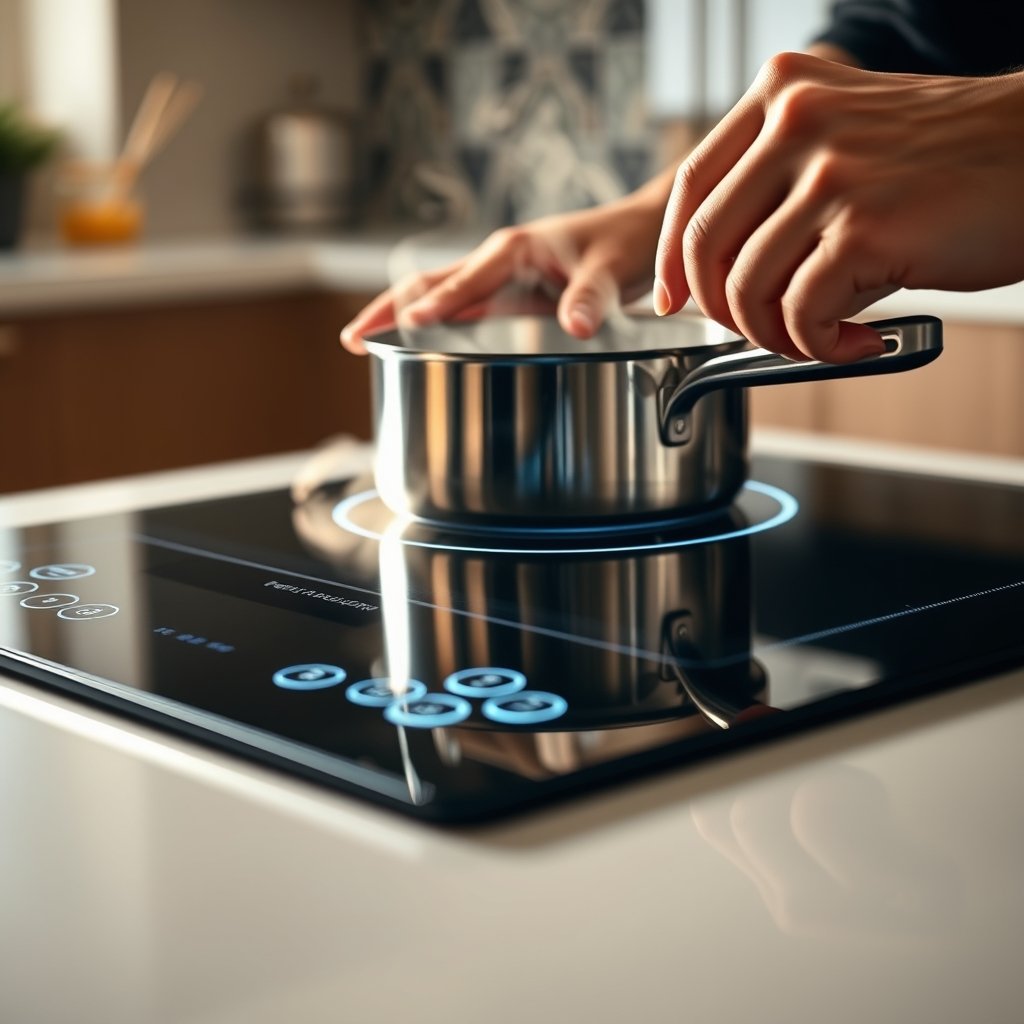
Induction is built for the apartment lifestyle—especially where space, safety, and air quality matter. Because induction only heats pots and pans (not the air), kitchens stay cooler, and that means lower A/C costs and more comfort during meal prep. No open flames or combustion gases means you avoid indoor air pollutants like NO₂, carbon monoxide, and fine particulates—major culprits in big-city respiratory problems. Induction surfaces also cool fast and won’t get hot when nothing’s on them, reducing burn and fire risks in tight or shared spaces.
For more small-appliance upgrades for your apartment, you might enjoy our guides on compact espresso machines or the best portable air fryers for small spaces.
Upfront costs, ongoing savings, rebates & simple ROI
A good single induction burner costs $70 to $150—typically less than half the price of a top portable gas burner (often $200 to $500). Over a year, utility savings run about 30% according to Department of Energy data (source). Add in federal rebates of up to $840 for those swapping from gas, and the typical payback for a portable induction burner is about 6 to 12 months for a home cook using it three or more times per week.
| Item | Induction Burner | Portable Gas Burner |
|---|---|---|
| Purchase Price | $120 | $350 |
| Operating Cost (1 Year) | $80 | $120 |
| Potential Rebates | Up to $840 | None |
| Typical Payback | 6–12 months | 2–3 years |
What to look for in a portable / single induction burner (must-have specs)
Look for these must-have specs in a single induction burner countertop model for apartments:
- Power Output: 1800W delivers near full-sized stove speed; accept no less for serious daily cooking.
- Precision Settings: At least 15–20 selectable power or temperature steps for versatile cooking.
- Safety Features: Child locks, auto shutoff, and overheat protection are essential in small apartments.
- Surface Quality: Flat glass-ceramic surface tops offer easy cleanup and durable daily use, but beware of cheaply finished units that can crack.
- Footprint: Compact designs (<20 inches wide) fit well on most apartment countertops.
For a detailed small-space appliance checklist, also see our guide to multi cookers.
Most frequent complaints & troubleshooting (what buyers actually report)
It’s not all upside. Here’s what buyers most often complain about with a single induction burner countertop unit—and how to avoid issues:
- Sensor misreads or auto-lockouts: Usually caused by pans too small, wrong material, or not centered. Solution: Use flat-bottom, induction-compatible pans and ensure good contact.
- Audible buzzing at high power: Common on cheaper units and with certain pans. Switch to heavier cookware for quieter operation. Some sound is unavoidable.
- Cookware compatibility: Induction only works with magnetic cookware. Check with a fridge magnet—if it sticks, it works. Aluminum, copper, and some stainless pans may need replacing.
- Rare glass-ceramic surface cracks: More likely if you drop a heavy pot or use harsh cleaners. Stick to gentle cloths and avoid thermal shocks (e.g., spilling ice water on a hot surface).
If you want more tips for picking the right kitchen gadgets, try our guide to apartment ice makers.
Electrical & installation considerations for renters
Good news—most portable induction burner for apartment units are plug-and-play, using a standard US wall outlet (110–120V), no special wiring required. The sweet spot for cooking performance is the 1800W class, which is compatible with most modern apartment circuits. However, in older buildings where circuits may already be heavily loaded (think fridge, microwave, toaster all on the same branch), tripping a breaker is possible if too many devices run together. Before purchase, check with your landlord or building management if you’re unsure—especially if you plan to upgrade to a full induction cooktop upgrade gas stove.
For more plug-and-play appliance tips, see our AI smart oven buying guide.
Long-term durability, maintenance & lifecycle expectations
The top-rated induction burners for apartments regularly last for years, often outliving their warranties if treated right. Daily care is simple: let the surface cool before wiping, use only gentle non-abrasive cleaners, and never submerge the unit or pour water over the controls. Avoid placing heavy objects or using oversized cookware that extends beyond the burner ring, as this can crack glass over time. Reviews of the best induction burner 2026 models (like the Duxtop Portable Induction Cooktop and Max Burton ProChef) confirm real-world longevity—multiple years in moderate-use apartments—with minimal repairs required.
For even more on countertop quality and warranty, see Consumer Reports’ comprehensive induction review.
Top recommended models to try (trial-first approach)
- Best Value: Duxtop Portable Induction Cooktop (1800W, 9600LS) — Highly rated for build, 20-setting precision, stability, and low noise at midrange price (about $130 in 2026).
- Budget Pick: Max Burton 6535 ProChef — Delivers consistent 1800W output and strong reliability for under $100. Ideal for those on a strict budget trial.
- Premium Quiet Option: Breville Control Freak — Pricey, but offers pro-grade temperature precision, ultra-quiet operation, and chef-level control for gourmet cooks.
- Ultra-Compact: Secura 9100MC — Slightly weaker (though still 1800W), but the most compact footprint for shoehorned counters.
When to choose a portable burner vs upgrade the built-in cooktop
Use this grid to find your fit:
| Scenario | Portable Induction Burner | Induction Cooktop Upgrade |
|---|---|---|
| Rent/Short-Term | ✔️ – No permanent changes, no risk to security deposit | ❌ – Requires landlord and electrical approval |
| Daily Use, Small Dishes | ✔️ – Easily matches gas for 1–2 person meals | ✔️ |
| Family Sized Cooking (3+ burners) | ❌ – Not ideal for multi-pot meals | ✔️ – Worth considering if you plan to stay for years |
| Desire to Test Before Committing | ✔️ – Inexpensive trial at $70–$150 | ❌ – High up-front cost |
In short—you can test induction with a single burner now for most benefits, then upgrade if you own or want a permanent, multi-burner solution as an induction cooktop upgrade gas stove option later.
Quick buyer’s checklist + in-home test script
- Check for 1800W max power—lower wattage units often can’t boil water quickly or sear food well.
- Inspect the power cord and plug: look for a grounded plug and sturdy strain relief.
- Perform a boil-speed test: Bring 1 quart of water to boil and verify it’s 20–40% faster than gas or older electric.
- Listen for buzzing under high power—minimal is best, but some is normal.
- Test with your existing cookware: Use a magnet to check if the pan is compatible. Bring your favorite pan to the store if shopping in person.
- Ensure surface stability: Place a full pot on the burner to see if it tips or wobbles.
- Try several power/temperature settings for even response.
- Read warranty details and support options—some brands only honor direct purchases.
- Review available rebates from government or utility programs.
- Evaluate the unit’s footprint: Will it fit in your usual cooking area with enough clearance?
For more apartment appliance checklists, see our advice on compact espresso machines and portable air fryers.
Final recommendation & next steps
If you’re a city renter wanting to modernize your kitchen, cut your utility bills, and get better air, a portable Induction Burner scores top marks for speed, energy savings, and easy trial—without risky, permanent changes. Built-in induction is a future upgrade if you own or need more burners, but for most apartment cooks, a single burner delivers 90% of the benefits at a lower price and with fast ROI. Start with a short boil test, check pan compatibility, and then measure your real-world savings—odds are high you’ll never want to go back to gas. Ready to make your apartment kitchen cleaner, safer, and smarter? Pick one of our recommended burners, try the tests above, and explore rebate options now!
FAQ
Do I need special pans for an induction burner?
Yes. Induction burners only work with magnetic cookware—cast iron, most stainless steel, and any pan that attracts a fridge magnet. Aluminum, copper, and glass pans won’t heat up.
Can a portable induction burner replace a full stove?
For most singles, couples, or light meal cooks, yes—a single-burner induction countertop unit covers the basics. Large multi-pot meals or family feasts may still require more burners.
What maintenance does a portable induction burner need?
Allow the surface to cool before wiping it with a soft damp cloth. Don’t use abrasive cleaners or submerge the unit in water. Inspect for cracks and avoid dropping heavy items.
Are induction burners noisy?
Some buzzing or humming at high power is normal—especially with thin or lightweight pans. Heavier-bottomed pans are often quieter on induction.
Will using an induction burner lower my utility bills?
For most apartment users, yes—induction uses about 30% less energy than gas or conventional electric stoves, leading to real monthly savings over time, especially for frequent cooks.