

Cookware for Induction Cooktop is one of the most confusing kitchen upgrade topics. Most sets claim induction compatibility, but in reality only some perform properly, and even top “best of 2026” lists miss testing methods you can trust at home. This no-fluff guide explains what works, why it works, and how to test your pans—so you know what to keep, what to upgrade, and how to buy for true performance and long-term value.
Key Takeaways
- About 70–80% of popular “induction” cookware sets in 2026 actually pass basic performance tests. The rest fail at-home checks or degrade quickly.
- True compatibility means more than a label—real-world tests like the magnet test, heating benchmarks, and base quality checks are essential.
- Most guides miss side-by-side heating data, long-term durability results, and real-world storage/use issues, so we show you how to spot (and avoid) those critical gaps.
- Quick verdict — how many popular sets actually work on induction?
- How induction compatibility is actually verified (materials, magnet test, certifications)
- Why some “induction ready” pots and pans sets underperform — common failure modes
- Conclusion
- Frequently Asked Questions
Quick verdict — how many popular sets actually work on induction?
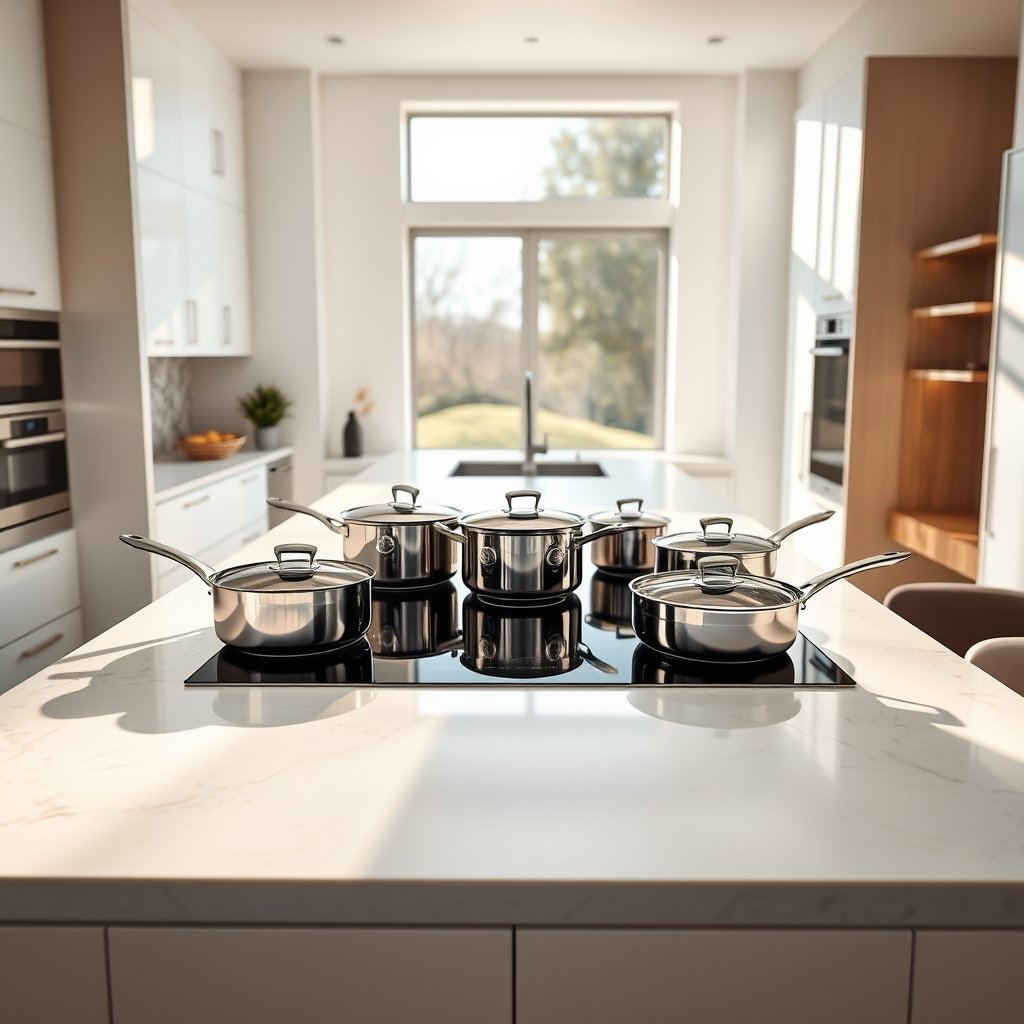
Roughly three-quarters of the most-popular cookware sets marketed in 2026 actually work on induction stovetops—about 70–80% when you filter out the “magnet-test-fails” and the cheap aluminum or copper-only lines that rely on a diffuser. This means if you bought a marketed “induction set” off a mainstream retailer, there’s still a 1-in-4 chance it won’t perform on your induction hob without tricks or adapters.
Why do some fail despite the label? Many cheaper or older “induction ready” pots use thin magnetic coatings or a tiny steel disk, which results in slow heating, poor simmering, and sometimes a total failure to trigger the cooktop. Only sets with a solid ferromagnetic base (often stainless steel with at least 10% iron, cast iron, or proper clad construction) consistently pass the real tests. For a true “best induction compatible cookware set 2026,” always verify with practical, not just marketing, benchmarks.
How induction compatibility is actually verified (materials, magnet test, certifications)
Here’s how to know with certainty if your cookware is induction compatible—no lab required:
-
Material & Construction: Look for ferromagnetic construction. The true winners are:
- Stainless steel alloys with at least 10% iron (especially Tri-ply magnetic stainless or disc-bottom designs).
- Fully cast iron (including enamel-coated types like enameled Dutch ovens).
- Carbon steel pans (as a solid induction safe alternative to cast iron for skillets).
- Magnetic base nonstick or hybrid cladded construction.
- Magnet “stick” test: Press a fridge magnet flat to the entire bottom of the pan—not just the center. It should stick firmly all over. If the magnet slides, or sticks only at the edges or not at all, the pan is not truly compatible.
- Check the label & certifications: Quality sets specify “induction ready” and mention a ferromagnetic base, not just vague “works on all cooktops.” Look for standards such as ISO, ANSI, or UL certification for induction.
True compatibility is confirmed by a simple magnet test (the magnet must stick firmly to the entire bottom), by manufacturers’ induction-ready labeling that specifies a ferromagnetic base, and by material specifications such as stainless-steel alloys with ≥ 10% iron, cast iron, or a cladded or disc-bottom construction — often backed by ISO/ANSI or UL certifications for induction use.
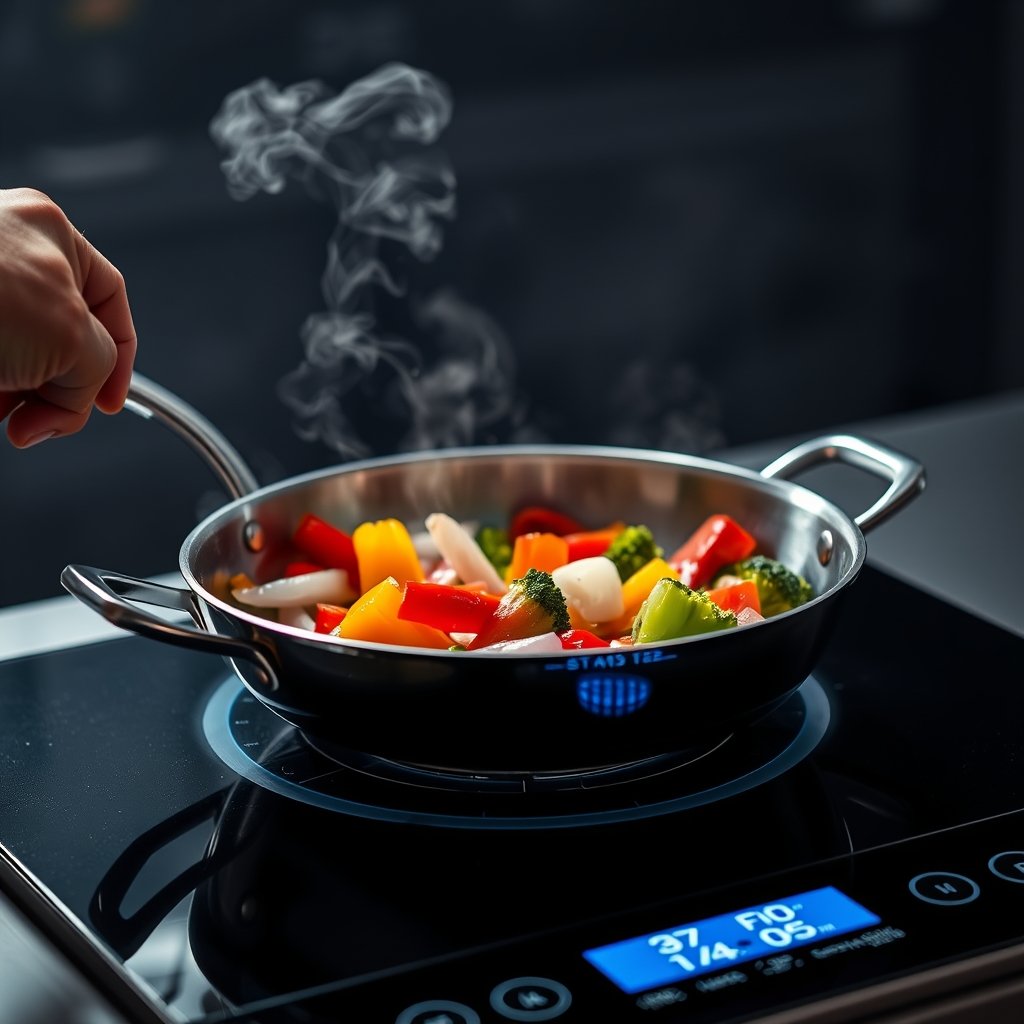
Not sure which of your old pans are okay? If you have cast iron (including enameled styles), magnetic stainless, or carbon steel, you likely already have a cast iron induction compatible skillet or a carbon steel pan induction safe for searing and sautéing. For more about multi-use performance, see our in-depth induction burner apartment guide.
Hybrid pans and classic nonstick often work only if the base disc is thick and continuous. Cheap aluminum or copper-only cookware will fail the magnet test and typically require a specialty heat-diffuser plate—do not rely on marketing language alone if savings or energy efficiency matter for you.
To compare with other kitchen upgrades that offer verified multi-appliance performance, read our practical portable air fryer guide and multi cooker checklist.
Why some “induction ready” pots and pans sets underperform — common failure modes
Even some cookware that passes the initial magnet check or claims “induction ready” fails quickly in practice. Here’s why:
- Thin or poorly bonded magnetic layers: If the ferromagnetic base is a mere coating or a small disk, it may delaminate, wear through, or create uneven heating—especially on low-power or portable induction burners.
- Warped or dented bottoms: Any deformation breaks full magnetic contact, causing loss of heating or inconsistent power delivery.
- Cheap hybrid/nonstick coatings: Flaking at pan edges exposes non-magnetic aluminum, and consumer complaints focus on these coatings failing after a few dozen cycles.
- “Humming,” buzzing, or loss of power at low settings: Light pans or pans with patchy/weak magnetic layers often trigger these symptoms—frustrating for anyone upgrading from gas or traditional electric.
- Heaviness and awkward storage: Many tri-ply or cast iron sets are durable, but buyers are often surprised by how heavy and non-nesting these pieces can be.
- Handle weaknesses: Poorly welded or riveted handles sometimes loosen after repeated heating, especially on induction where base temperatures rise rapidly.
The most common consumer complaints focus on premature wear of magnetic bases or nonstick coatings (edges showing wear, coating flaking), warping or dented bottoms that reduce magnetic coupling and cause uneven heating, and humming or loss of power on low-power hobs when the magnetic layer is thin or poorly bonded.
| Failure Mode | How to Spot | Result on Induction | DIY Test |
|---|---|---|---|
| Thin magnetic base | Very light weight, magnet sticks only faintly | Poor heating, humming, won’t trigger low settings | Magnet slides or clicks off |
| Warped/dented bottom | Pan wobbles on flat surface | Stops working, uneven heating | Check on glass tabletop or induction hob, see gaps |
| Flaking nonstick | Black/grey specks at rim or bottom | Rapid wear, base exposed, may lose magnetism in spots | Visual and touch check after each cleaning |
| Hybrid patchwork base | Magnet “grips” only at center disk | Cold spots at pan edge, food sticks/burns | Full-base magnet test |
| Overweight for size | Tri-ply/cast iron hard to lift, won’t nest | Durable but awkward to use or store | Weigh vs. similar diameter basic pan |
For even more detailed analysis, including low-power and lightweight induction burner scenarios, see the actionable guide on portable induction burners.
Many other “best induction” guides, such as Consumer Reports, confirm the importance of comprehensive home tests but rarely give side-by-side efficiency (watts-per-inch), price-to-performance, or durability benchmarks, so shoppers have to fill the gaps themselves.
Conclusion
Choosing Cookware for Induction Cooktop is about practical, verifiable performance—not just the label. Only about 70–80% of today’s “induction” sets actually deliver, and routine at-home magnet, heat, and sight tests are your best protection.
Don’t just take brands’ word or a quick online “best of 2026” list. Run the magnet/heat checks, compare weight and construction, and prioritize thick magnetic or lidded cast iron, tri-ply magnetic stainless, or robustly-clad hybrids from trusted brands.
Ready to upgrade your full setup? Start by keeping verified pieces, supplementing with key “missing” pan types, or review our preferred models for lasting value, heat performance, and safety. For more on kitchen tech upgrades, review our Induction Burner and AI Smart Oven practical guides. Choose smart, test at home, and enjoy lower bills, easier cleaning, and a safer kitchen.
Frequently Asked Questions
How can I quickly test if my current pans work on induction?
The fastest method is the magnet test. Place a fridge magnet flat to the entire pan bottom. If it sticks firmly everywhere, the pan is likely induction compatible. For best results, also test by boiling a known amount of water and checking heat-up speed on your induction hob.
Is cast iron always induction compatible?
Yes, all cast iron cookware—including enameled versions like Dutch ovens—are naturally induction ready. They provide even heating, though they’re heavy and require special care to prevent rust and chipping.
Can I use nonstick pans on my induction cooktop?
Only if the nonstick pan has a true magnetic base (often marked “induction ready” and passes the magnet test). Avoid cheap pans with thin or patchy magnetic disks as they underperform and wear out fast on induction.
Why do some “induction ready” pans hum or stop heating at low power?
This usually happens if the magnetic base is too thin or unevenly bonded. Try the pan on different power settings—if humming or power loss occurs, consider upgrading to a pan with a full-thickness ferromagnetic base, such as heavy tri-ply stainless or traditional cast iron.
What is the best value material for an induction-compatible set?
Tri-ply magnetic stainless or cladded sets offer the best blend of durability, even heat, and long-term value. For oven-to-table versatility and searing, enameled or raw cast iron is great. Nonstick is best as a supplement, not a full set, if it has a thick induction base and is labeled non-toxic.