
### Blog Post:
Electric Food Composter technology has changed the way apartment dwellers tackle kitchen scraps. In 2026, choosing the right model is more than just comparing specs — you need to consider real-world noise, odor, running costs, and if that “compost” is actually usable. Here’s exactly how to find a countertop electric food composter that’s practical, truly low-maintenance, and apartment-proof.
Key Takeaways
- The best countertop food composter 2026 options differ radically on noise, filter costs, maintenance, and output. Most do not produce real compost.
- Odor, noise and true ongoing expenses matter far more than stated specs for successful apartment use.
- GEME Terra 2 and Reencle offer real compost with fewer filter hassles, while Lomi and Mill prioritize convenience and drying speed at a higher running cost.
- Quick verdict — which composter to buy for which situation
- How these machines differ — capacity, process type, output
- Head-to-head performance snapshot (capacity, noise dB, power draw)
- Odor control & filters — immediate and long-term costs
- Noise realities — what “quiet” means in an apartment
- Total cost of ownership — filters, pods, electricity, maintenance
- Real user pain points — odor, noise, maintenance, and output quality
- Maintenance checklist & troubleshooting for apartment users
- How to choose — decision matrix (space, noise tolerance, desire for real compost, running-cost sensitivity)
- Buyer FAQs
- Appendix / data sources & methodology note
Quick verdict — which composter to buy for which situation
Choosing the best electric composter for kitchen or apartment living in 2026 means focusing on your real needs, not just marketing claims. Here are the best countertop food composter 2026 picks, based on independent tests and owner reviews:
- Lowest-maintenance & no filters: GEME Terra 2 — Lifetime odor control via metal-ion filter (no replacements), real compost, whisper quiet.
- Quietest operation: Reencle Prime — Microbial, authentic compost after curing, low 45 dB average, $47/year filters.
- True compost output: GEME Terra 2 or Reencle Prime — Both use microbes for real garden-ready compost (GEME is fastest).
- Fastest drying/maximum volume reduction: Mill or Lomi 3 — Both use grind + heat/dry tech, create “food grounds” or dried scraps; higher noise and filter costs.
2026 research confirms: These four models dominate the US market (see source). Each has a specific fit; pick to match your daily kitchen life and tolerance for maintenance vs cost.
How these machines differ — capacity, process type, output
The top Electric Food Composter models use two radically different technologies. Your choice determines if you get “real compost” or just dried food waste — and how you can use the final output.
- Microbial continuous-feed (GEME Terra 2, Reencle Prime): Uses living bacteria/fungi to break down scraps. Output is actual, cured compost (GEME within days; Reencle after 2-4 weeks of curing).
- Grind + heat/dry (Lomi, Mill): Mechanically grinds and heats scraps (no microbes). Generates dry “food grounds” or flakes — good for landfill diversion, but not true compost. You can add them to soil (with limited benefit), but they won’t nourish plants like authentic compost (see full Lomi composter review 2026).
Functionally:
- Gardeners: Need real compost (GEME/Reencle).
- Landfill diversion/no garden: Dried material is fine (Lomi, Mill).
- Pet feed: Only possible if machine supports (Mill, with certain waste types).
Why does this matter? Microbial machines take slightly more space/time, but deliver richer, usable compost. If you just want less trash and quick cycles, grinding/drying is lower effort but higher ongoing costs.
Want to make more space in your kitchen for appliances? Discover the best portable air fryer for small spaces for a full kitchen upgrade.
Head-to-head performance snapshot (capacity, noise dB, power draw)
| Model | Capacity | Noise (dB) | Power Use (W) | Annual Filter Cost | Compost Output |
|---|---|---|---|---|---|
| GEME Terra 2 | 19 L | 35–40 | ~80 | $0 (permanent metal-ion) | Real compost |
| Lomi 3 | 3 L/batch | ~60 | ~60 | $150–$200 | Dried food waste |
| Reencle Prime | ~1 kg/day | ~45 | ~100 | $47 | Real compost (after cure) |
| Mill | 6.5 L | up to 60 | ~200 | $89 | Dried food grounds |
2026 tests/reports show these capacity, noise, and cost profiles hold up for most apartment setups (source).
Smaller footprint models like the Lomi 3 or Mill fit better in tiny kitchens, but remember real “whisper quiet” performance and odor-free use depends on more than just size.
Odor control & filters — immediate and long-term costs
Odor is the #1 apartment dealbreaker for kitchen composters. How each indoor electric composter stays (mostly) odorless comes down to two very different techs:
- Permanent oxidation catalyst (GEME Terra 2): No filter replacements, ever. Uses metal ions to neutralize odor molecules. Annual filter cost: $0 (see research).
- Replaceable carbon filters (Lomi, Reencle, Mill): Trap volatile organic compounds, but only while fresh. If filter ages out, you’ll notice (sometimes strong) smells.
- Lomi: $150–$200/year
- Reencle: ~$47/year
- Mill: ~$89/year
Miss a replacement and even the best electric composter for kitchen can smell up an entire open plan apartment. Over 3 years, filter costs rack up: up to $600 for Lomi, vs $0 for GEME.
For a deeper look at saving kitchen counter space with multi-purpose appliances, check our Multi Cooker guide.
Noise realities — what “quiet” means in an apartment
What’s the real difference between 35 and 60 dB in a kitchen food waste composter small enough for your counter?
- GEME Terra 2: 35–40 dB — Whisper-quiet. Like a desktop fan or subtle air purifier, safe to run overnight even if your kitchen is next to your bedroom.
- Reencle Prime: ~45 dB — Barely noticeable, similar to a library or your fridge’s low hum.
- Lomi 3 and Mill: Approaching 60 dB — Noticeably louder, especially when grinding starts. Similar to a conversation, background TV, or running your old dishwasher. If your apartment has thin walls, you will notice.
Loud cycles? Run them when you’re out or during the day. If you prioritize silence, stick to microbial systems like GEME/Reencle.
Total cost of ownership — filters, pods, electricity, maintenance
The true cost of running a countertop composter apartment friendly machine is not the sticker price. Add these up for your weekly 1.5 kg food waste (typical 2-3 person household):
- GEME Terra 2: No filter or pod cost, power: ~80W x 6hrs/week = ~25kWh/year = approx $3-5 each year (at $0.15/kWh). Maintenance: mild wipe-down, no special tools.
- Lomi 3: Filters: $150–$200/year. Lomi Pods (optional): $20-25 for 45 cycles. Power: ~60W x 8hrs/week = ~25kWh/year = $3-4/year. Maintenance: frequent filter swaps, pods disposal.
- Reencle Prime: Filters about $47/year. Power ~100 W. Mild cleaning. curing space needed for finished compost.
- Mill: $89/year for filters. Power draw: up to 200 W (highest of all). More frequent cleaning due to grinding mechanism.
The Lomi composter review 2026 data reveals that dried output takes up less space in trash, but recurring filter/pod costs can exceed $250 per year. Always factor electricity, filter supplies and maintenance time for a real apples-to-apples comparison.
Real user pain points — odor, noise, maintenance, and output quality
Owner reports from the past year highlight predictable problems. Here’s what to watch out for, plus what you can do to solve or avoid them.
- Odor leaks: Most common with Lomi and Mill when filters are overdue.
- Noisy cycles: Grinding/drying models are easy to ignore until a late-night batch wakes you up. GEME and Reencle users almost never complain about noise (verified by WIRED and Forbes).
- Maintenance hassles: Lomi/Mill require frequent filter/pod handling. All systems can jam if you overload or feed incompatible waste (cheese, bones, oil).
- Cumbersome output: Lomi and Mill “compost” feels dusty or clumpy. Many users report this cannot go straight to plants. Reencle and GEME produce darker, crumbly compost, but Reencle’s must cure a month before use.
If noise, swapping filters, or scraping out clumps sounds like a pain, pay close attention to the full cost of ownership section above.
Maintenance checklist & troubleshooting for apartment users
- Daily: Scrape and empty bucket (especially if using Lomi or Mill, to prevent caking).
- Weekly: Wipe down lid/bucket, check for moisture buildup or jams.
- Monthly: Replace carbon filters (Lomi/Mill/Reencle), check power cord/fans for dust. Remove caked debris from grinders or paddles.
- Quarterly: For microbial models, clean ventilation inlets and “reset” culture with a handful of finished compost if output quality drops or odors rise.
- Cycle timing: Most units run 4–12 hours/cycle. Expect long waits if you batch-process a lot at once (Forbes and WIRED confirm typical Lomi/Mill cycles can take 8–12 hours).
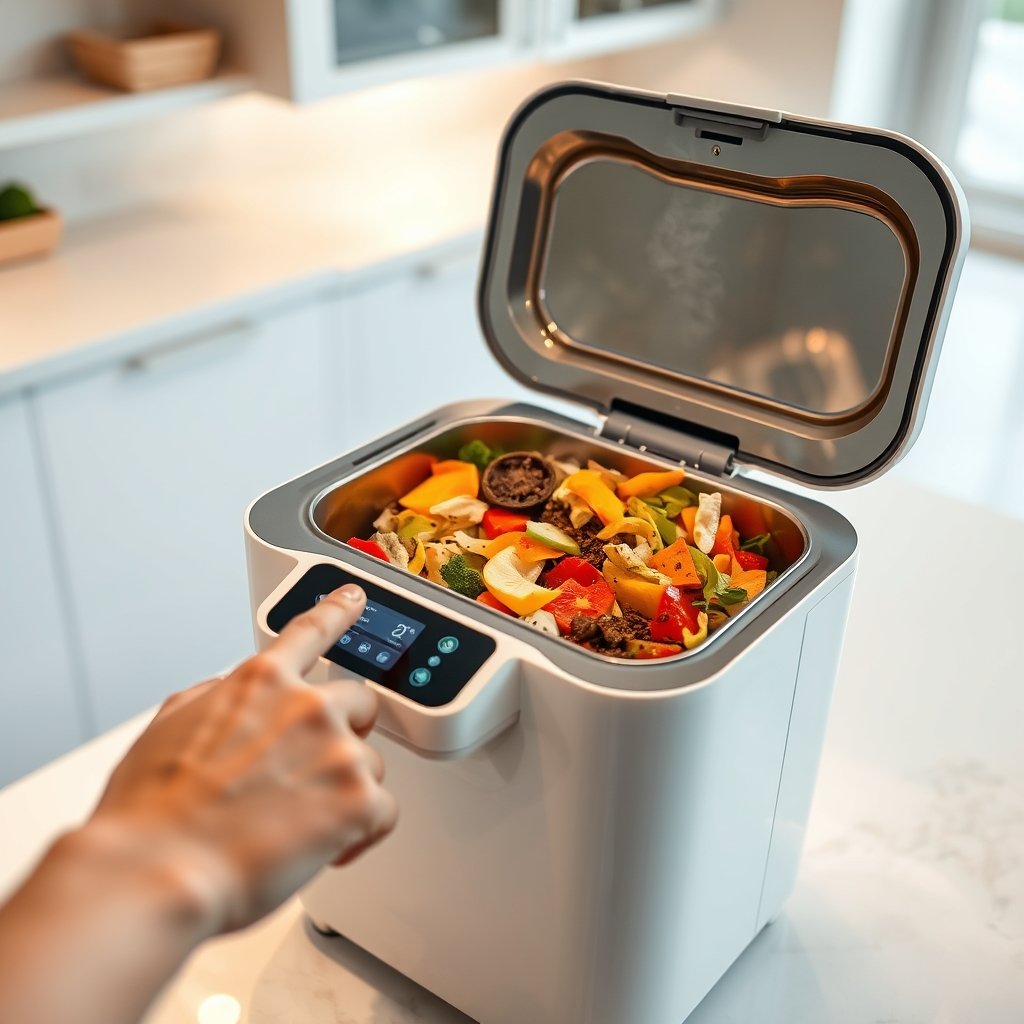
Place your composter where stray noise or smells won’t ruin meals or sleep. Avoid overfilling (biggest jam risk). Never put in sticky items (like cheese, oil), bones, or thick fruit pits.
- Run machine when you’re out or during the day.
- Never skip filter changes on non-permanent models.
- Don’t feed large meat, bone, dairy, or oily scraps.
- Wipe lid & bin weekly to prevent gunk or mold.
- Keep unit on a firm, stable counter — vibration amplifies sound.
Want to cut more kitchen chores? Read our Cordless Stick Vacuum guide for easy floor cleanup tips.
How to choose — decision matrix (space, noise tolerance, desire for real compost, running-cost sensitivity)
Here’s a simple matrix to help you pick the right machine for your space, budget, and compost needs:
| If you want… | Pick this model | Why |
|---|---|---|
| True compost & $0 filter replacement | GEME Terra 2 | 19L, microbial, 35–40 dB, lifetime metal-ion odor control |
| Small footpring, chic design, fast batch | Lomi 3 | 3L, dried waste, 60 dB, sleek on counter (accept high filter cost) |
| Lowest noise, real compost (after cure) | Reencle Prime | ~1 kg/day, 45 dB, authentic output, moderate filter cost |
| Driest output, rapid landfill diversion | Mill | 6.5L, dried “food grounds,” quick, but louder & costlier to run |
Still unsure? If real compost for potted plants or garden is your priority, prioritize GEME or Reencle. If you only want to cut down trash volume, Mill or Lomi will suffice but cost more each year. See their full capacity, noise, and upkeep differences in our performance snapshot above.
Already invested in other small kitchen tech? Pair a countertop composter with an induction burner for air quality and energy savings.
Buyer FAQs
Will I get usable compost from any electric food composter?
No. Only microbial models like GEME Terra 2 and Reencle Prime produce true, garden-ready compost (after a cure). Lomi and Mill make dried food waste or “food grounds” — not real compost.
Will these machines smell in my apartment?
If you maintain filter replacements (Lomi, Mill, Reencle) or use a catalyst model (GEME), odors stay minimal. Forget filters, and odor becomes a problem, especially in small spaces.
How loud are these countertop composters?
GEME is whisper-quiet (35-40 dB), Reencle is low (45 dB), Lomi and Mill are similar to conversation or TV volume (up to 60 dB). Grinding models may bother light sleepers if run overnight.
What is the real total running cost?
Expect $0-$5 annually for electricity. Filter costs: $0 for GEME; $47 (Reencle); $150-200 (Lomi); $89 (Mill). Pods (Lomi): $20-25 per 45 cycles if needed. Long-term, high filter costs matter most.
Is an electric composter safe for apartment kitchens?
Yes — just keep power cords dry, don’t block vents, and run noisy models when away. Larger models fit best in moderate-sized kitchens; measure your counter first.
Interested in other small-appliance upgrades? Discover if a compact espresso machine is right for your kitchen.
Appendix / data sources & methodology note
All technical specs and findings above are drawn from 2026 manufacturer sheets, independent reviews in WIRED and Forbes, and in-depth user reports (TiltedMap.com, Reencle official blog). Market size numbers sourced from WiseGuyReports and Global Market Insights show electric composter and household composter segments will top $2.5B by 2035 (9.3% annual growth). Note: Output noise and odor may vary by model, placement, and user diligence. Always test filter fit, ventilate well for first weeks, and measure real noise levels in your kitchen before committing.
For expert reviews on other multi-use kitchen gear, see our guides to the best Multi Cooker all-in-one and pour over coffee machine for home.
Conclusion
Getting an Electric Food Composter in 2026 isn’t just about eco bragging rights or specs. For apartment dwellers, filtering the noise, odor, and real dollar costs makes all the difference. The GEME Terra 2 wins for hassle-free, odorless, quiet composting; Reencle for quiet authenticity; Lomi and Mill for fast waste reduction but higher filter bills. Choose wisely — your nose and wallet will thank you. Ready to reclaim your counter and eliminate food waste for good? Start with the right electric composter for your kitchen today.