

Induction Hob with Downdraft Extractor is the game-changing solution for anyone planning an island or open-plan kitchen and determined to eliminate an overhead hood, without sacrificing real ventilation power, silence, or ease of maintenance. If you are a designer, architect, or detail-driven homeowner, read on: this guide will show you how to spot, test, and confidently spec a cooktop with integrated extraction that truly performs in the real world.
Key Takeaways
- For a true hood replacement in an island, prioritize induction hobs with downdraft extractor airflow ≥400 m³/h and operating noise ≤65 dB(A) at medium speed.
- Booster zones should reach ~3.8 kW and boil water in under 3 minutes—check for 9–15 power levels and sensor-based controls for practical cooking flexibility.
- Major pitfalls include insufficient extraction for tall pots, filter clogging, installation complexity, and reliability concerns—always compare specs in-store using real-world tests before purchase.
- Why choose an Induction Hob with Downdraft Extractor for island & open-plan kitchens
- Performance & energy efficiency vs traditional hoods and gas ranges
- Noise expectations and how to evaluate real-world sound levels
- Common user complaints & reliability issues seen in verified reviews
- The 3 technical specs every spec sheet must show
- Installation, ducting choices, and maintenance realities for island kitchens
- How to test and compare models in-store or during demo (practical checklist)
- Buying decision checklist — quick answers for spec sheets and client sign-off
- Closing recommendations — best use cases and red flags to avoid
- FAQ
Why choose an Induction Hob with Downdraft Extractor for island & open-plan kitchens
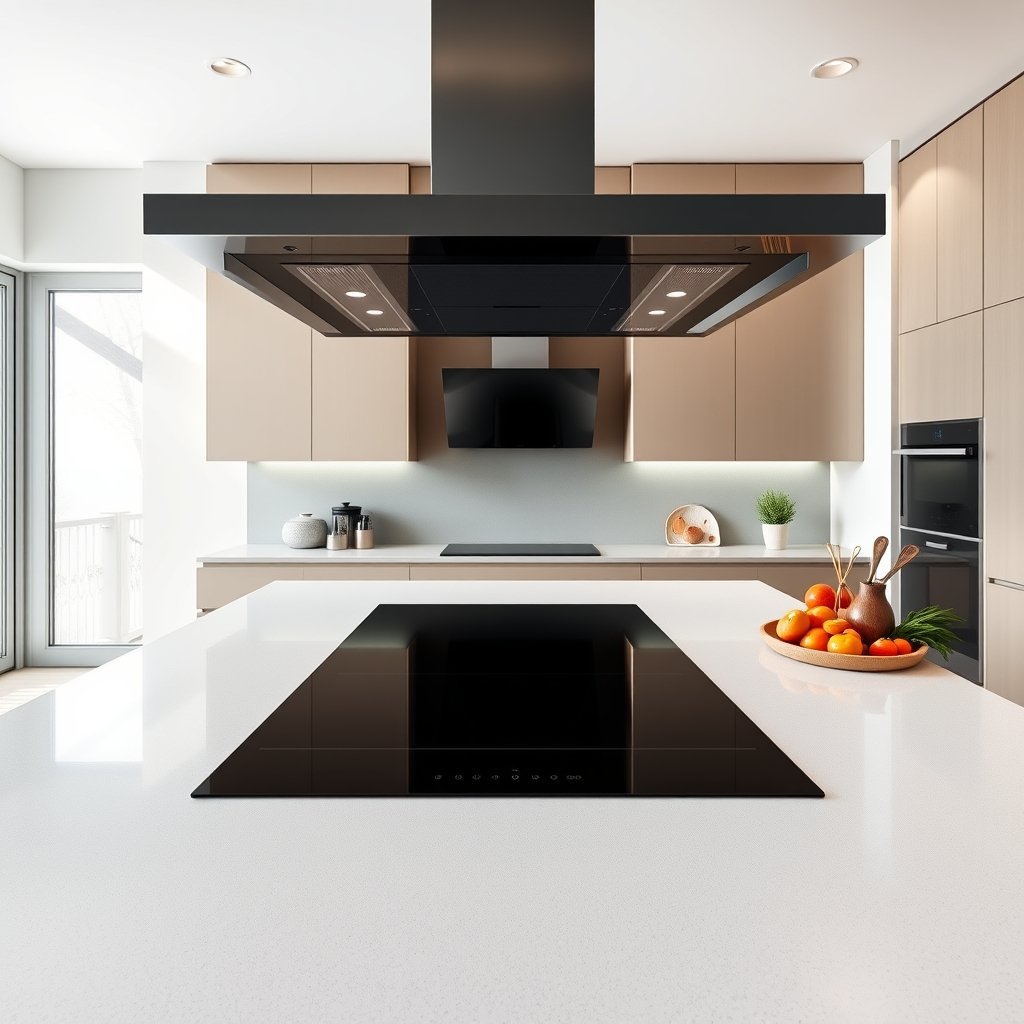
For designers and homeowners, the allure of an island or open kitchen often breaks down when you add a bulky, ceiling-mounted hood right in your sightline. Choosing an induction hob with downdraft extractor means embedding powerful ventilation right into the surface of your cooktop. This gives you complete freedom in island layout, opens up visual lines, and keeps your cabinetry design uninterrupted—without giving up vital kitchen air quality. Modern integrated extractors now move 400 to 500 m³/h of air while drawing just 30–45 W, making them one of the most efficient and compact ventilation options available for open-plan kitchens or islands [Ciarra Appliances].
Performance & energy efficiency vs traditional hoods and gas ranges
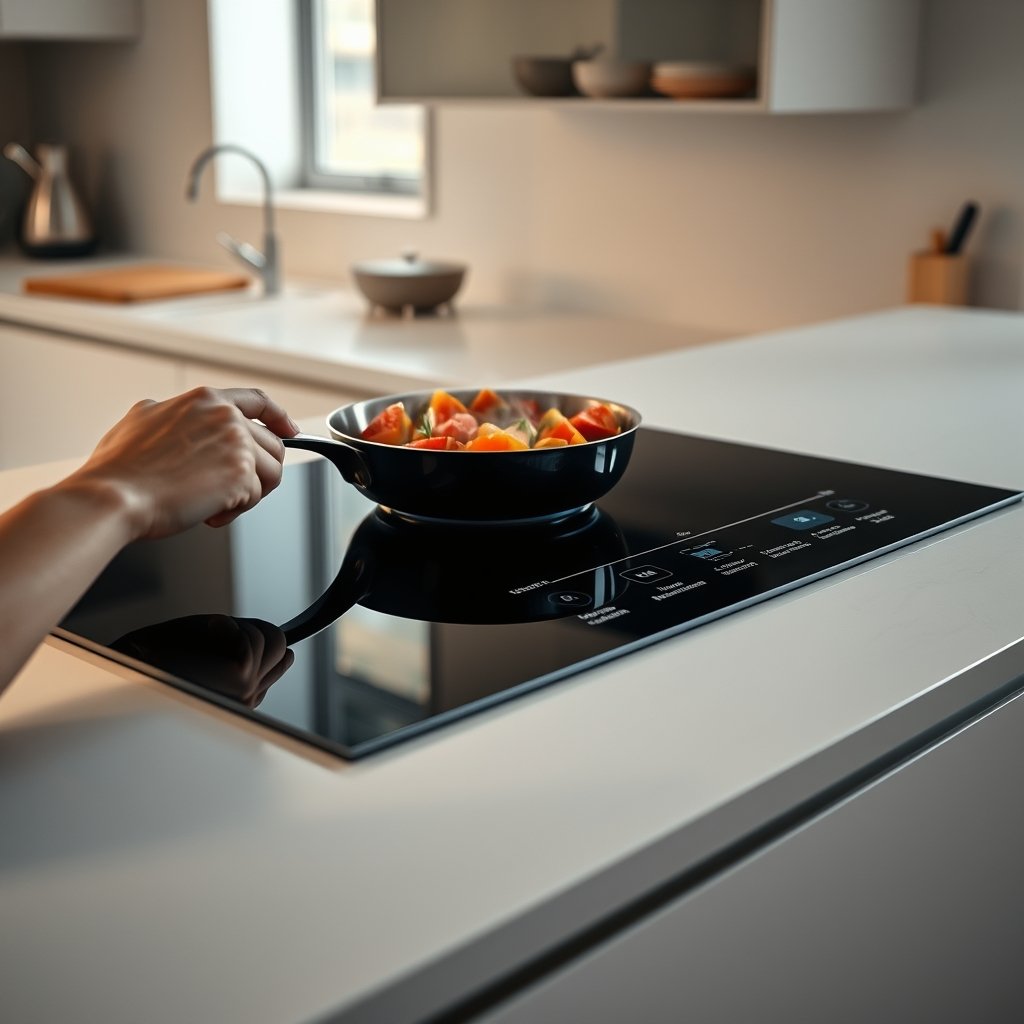
When comparing cooktop setups, induction cooktops with built-in downdraft ventilation in 2026 outperform both electric smooth-tops and gas ranges on energy efficiency, speed, and control. Induction zones with booster functions commonly deliver around 3.8 kW of heat per zone and can bring water to a boil in about two to three minutes. That is up to three times faster and more efficient than most gas ranges, and about 10% more efficient than regular electric smooth-tops [Energy Study PDF]. Integrated extractor systems draw 30–45 W but deliver 400–500 m³/h of airflow—sufficient to match or even exceed many standard under-cabinet hoods.
Unlike traditional hoods that force a ceiling structure compromise, the induction cooktop with built-in downdraft ventilation 2026 frees up upper cabinets and eliminates view-blocking installations. Most current models also provide flexible cooking zones and advanced touch controls for multi-pot cooking—plus safety benefits, since induction surfaces stay cool to the touch.
In summary, this solution optimizes kitchen workflow, reduces excess heat in the room, and cuts long-term energy bills—outperforming gas in almost every metric. For even broader efficiency upgrade possibilities, see our Induction Burner Apartment Guide and Multi Cooker Buying Checklist.
Noise expectations and how to evaluate real-world sound levels
Noise is a crucial and often under-discussed factor. An induction hob with integrated fan exhaust typically operates at 55–70 dB(A). For reference: 55 dB(A) is a quiet conversation, 70 dB(A) is busy restaurant-level sound. Models like Bosch run at about 60 dB(A) during normal operation and 69 dB(A) at max speed [Joybuy Review]. Aim for ≤65 dB(A) at medium speed if you want easy conversation in your open kitchen. If you’re sensitive to noise, ask to test the demo in-store, and consider user reviews reporting transient fan noise spikes.
| Model | Airflow (m³/h) | Boost Power (kW) | Noise Level Max / Med [dB(A)] | Induction Power Levels |
|---|---|---|---|---|
| Bosch PVQ811H26E | ~500 | 3.7 | 69 / 60 | 17 + Booster |
| Samsung NZ36K7880US | ~465 | 3.7–3.8 | 68 / 62 | 15 + Booster |
| Bertazzoni P804ICH2M37NT | ~400 | 3.7 | 67 / 58 | 9 + Booster |
| Average Standard Hood | ~600 | N/A | 75–80 | N/A |
Designers and buyers occasionally overlook that noise measurements are typically done in laboratory setups—real kitchen acoustics (bounce from glass, hard floors) can raise effective loudness, so always validate in context when possible.
Common user complaints & reliability issues seen in verified reviews
Analysis of verified reviews, including Samsung extractor induction hob review threads, repeatedly surfaces three pain points. First, some users find extraction insufficient for very tall pots or heavy simmering (steam can escape before reaching the downdraft zones). Second, downdraft induction cooktop no hood setups carry up to 50% higher upfront cost versus a traditional induction + under-cabinet hood—especially when island ducting is complex. Third, filter clogging, intermittent fan noise jumps, and reports of temperature or hot-surface indicator errors can require extra maintenance or warranty service [Wirecutter], [Samsung Support].
To minimize risk, always choose manufacturers with strong after-sales support and seek out service contract options. For further reliability data and troubleshooting, check our AI Smart Oven Buying Checklist and Single Dose Coffee Grinder Guide for parallel appliance quality tips.
The 3 technical specs every spec sheet must show
Too many brands bury or omit these critical numbers—make sure the following appear on any spec sheet before presenting or signing off a purchase for an island or open-plan kitchen:
- Airflow capacity (m³/h): Look for at least 400 m³/h to handle regular frying or boiling on multiple zones. Anything less may fail at venting heavier steam and odors, especially in an open area.
- Operating noise (dB(A)): The best induction cooktop with downdraft 2026 models declare ≤65 dB(A) at medium speed (the most used setting). If absent, consider it a red flag.
- Induction power range & booster (kW): Practical zones offer 9–15 levels with ~3.8 kW booster and sensor-based controls for precise temperature—crucial for rapid boiling, stir-frying, and specialty tasks.
Always ask for measured data, not marketing claims—bring these up at product training or when detailing for client proposals. If you’re specifying for bespoke or panel-ready builds, see our Panel Ready Refrigerator Installation Guide.
Installation, ducting choices, and maintenance realities for island kitchens
Induction hob with integrated ventilation installations require careful duct/plenum design and extra under-cabinet space.
You usually have two options: ducted (vented outdoors, best for heavy cooking) or recirculation (uses a carbon filter, easier for apartments or where ducting is hard).
No range hood kitchen induction setups work best with ducted exhaust, but recirculating models can suffice for light-to-medium tasks.
Modern extractor systems come with removable, often dishwasher-safe filters, and spill reservoirs to protect the motor and fan.
Plan for easy filter access and expect to clean or replace filters every 2-6 months, depending on usage.
Extractor draw is typically 30–45 W, with airflow in the 400–500 m³/h range—these numbers directly drive your duct sizing and service panel choices.
For deeper dives into filter and duct maintenance, see our Compact Espresso Machine Guide for related care tips in kitchen appliances.
How to test and compare models in-store or during demo (practical checklist)
Never decide based only on specs: validating real-world function is crucial. Use this checklist as your hands-on testing protocol for induction cooktop with built-in downdraft ventilation 2026 models:
- Bring a phone with a decibel meter app—measure noise at both medium and max fan speeds (target: ≤65 dB(A) at medium).
- Request a boil test: a ~3.8 kW booster should bring 1L of water to a rolling boil in 2–3 minutes.
- Ask to demo smoke/odor extraction with a smoke pen, frying pan, or pot of simmering water—check how much escapes the vent area, especially with tall pots.
- Inspect filter design: is it easy to access, remove, and (ideally) dishwasher-safe?
- Note overall build, touch controls, power level feedback, and request details on after-sales service contracts.
If the retailer can’t demonstrate at least airflow ≥400 m³/h and acceptable noise, think twice about a purchase. This approach will also surface any design or engineering weaknesses upfront. For clever in-store demo strategies, browse our Portable Air Fryer Small Spaces and Workstation Sink Buyers Guide—their checklist approach is directly applicable.
Closing recommendations — best use cases and red flags to avoid
An Induction Hob with Downdraft Extractor is an ideal fit for island installations, contemporary open plans, and homeowners who fry moderately and want clean sightlines. Use downdraft solutions when extraction hits at least 400 m³/h and fan noise at medium is ≤65 dB(A). Avoid models where key specs are buried, where airflow is undersized, and where reliability complaints are common—particularly around filter clogging, error lights, or poor service. Remember, induction delivers around 10% better energy efficiency versus electric smooth-top cooking and up to three times that of gas, but ventilation still must match your kitchen’s duty cycle. Before you spec, test, and sign off, circle back to your project’s airflow and maintenance requirements and review all real-user feedback.
Ready to specify or upgrade your kitchen? Use the checklist above and demand full details. For related performance guides, explore the Induction Burner Guide or our Multi Cooker FAQ on space and energy-saving appliances.
Induction Hob with Downdraft Extractor could be your kitchen centerpiece—if (and only if) it passes the practical tests in this guide. Always see, touch, and validate before you buy.
FAQ
Does an induction hob with downdraft extractor really replace a traditional hood?
For moderate frying, sauteing, and boiling, yes—if the airflow is ≥400 m³/h and noise is ≤65 dB(A). For heavy wok, high-heat searing, or multi-zone steam, a high-performance ceiling hood still outperforms downdraft systems.
What’s the noise level during real cooking?
Most run 55–70 dB(A); aim for ≤65 dB(A) at medium fan to keep the kitchen comfortable for conversation.
Are maintenance and cleaning easy?
Modern models feature removable, often dishwasher-safe filters and spill reservoirs. Regular access for cleaning is straightforward, but plan on filter upkeep every 2–6 months depending on cooking volume.
What are the biggest issues seen in user reviews?
Insufficient extraction with tall pots or crowded pots, occasional fan noise spikes, filter clogs, and control panel or hot-surface light errors. Always research service and parts access for your chosen brand.
Is installation for island kitchens complicated?
It can be. Ducting may require significant changes to cabinetry or routing—consult kitchen planners early, and clarify whether recirculation or true ducted exhaust is best for your actual space.